
Introduction
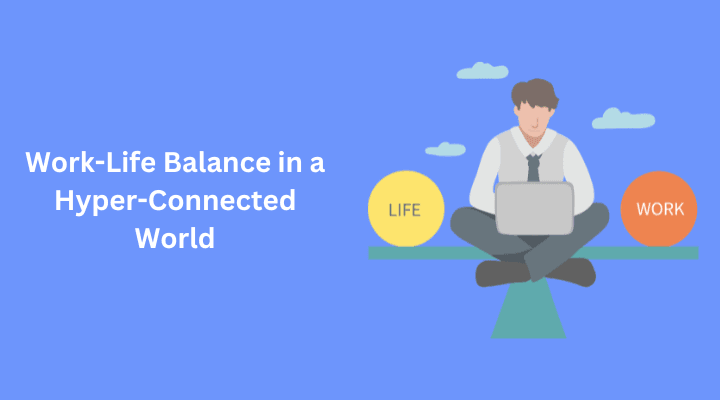
We often find ourselves answering late-night emails and calls, This familiar scenario indicates a growing challenge: maintaining work-life balance in our hyper-connected world. While technology often causes this imbalance, it can also be part of the solution.
In this blog, we are exploring the balance between work and life outside work. We look at challenges and come up with strategies for the same. We will also discuss how technology can build a healthier, more productive work-life balance.
Challenges of the Hyper-Connected World
Constant Availability Expectations
The boon to be reached anytime can create pressure always to be responsive. It often exceeds work hours. This directly impacts work-life balance by extending work pressures into personal time.
Digital Distraction and Productivity Loss
Long work hours due to lost productivity can reduce personal time.
Digital Addiction
Excessive use of digital devices, often for work-related purposes, pushes the professional to digital addiction. It affects relationships and individual activities.
The Role of Employers
Employers are the first ones who can facilitate work-life balance for their employees. The first thing they can do is implement policies that support this balance, for example - flexible working hours, remote work options, and paid time off.
Building a culture respecting people's personal time is vital. With this, employers can create an environment where employees feel comfortable disconnecting after work hours. They can take breaks and use their vacation time without guilt.
Talking about stress management is not enough. Employers need to provide the resources for it. They can offer Employee Assistance Programs (EAPs), wellness initiatives, and mental health support services. Technology can solve the work-life balance.
Some ways to improve employees' work-life balance
Project Management Software
Project management software can help employees to manage their multiple projects in one place. This organized procedure reduces overtime and allows employees to complete their work within regular hours. Examples:
- Asana: Companies can use Asana to manage complex projects and workflows.
- Trello: Trello is best for visual task management.
- Microsoft Project: Large corporations like BMW and Volvo do their comprehensive project planning with Microsoft Project.
Time Tracking Software
Time-tracking software can help both employers and employees understand how time is being spent. This can identify areas where work processes can be improved, potentially reducing unnecessary overtime.
- Examples:
- RescueTime: Microsoft and Apple prefer to track time spent on various tasks with RescueTime automatically.
- Engage HRMS: Engage HRMS offers a comprehensive time-tracking system for its users withing the HRMS software
AI-Powered Scheduling
Scheduling tools can help manage employee workloads more effectively. AI-powered tools can analyze patterns and suggest optimal schedules that balance workload across teams. Examples:
- Calendar.com: Use AI to optimize scheduling and reduce meeting overload.
- Clara: An AI scheduling assistant used by companies like Uber and Sequoia Capital.
Digital Wellness Platforms
The digital wellness platforms help to improve employee health and well-being. As they have features like meditation guides, fitness tracking, and stress management resources, employees take care of their physical and mental health. Examples:
- Headspace for Work: This tool provides mindfulness and meditation resources to the users.
- Calm for Business: Adopted by organizations like Gymshark and 3M, this tool offers relaxation and sleep aid tools to their workforce.
Automated Time-Off Management Systems
Automated time-off systems are like smart online calendars for vacations. Employees can request time off through an app or website. The system checks if it works with the team's schedule. If it does, it asks the higher authorities to approve. Once approved, it updates the team calendar automatically. This makes the process easier for employees and helps employers keep teams running smoothly while people are away.
Virtual Reality (VR) Technology
Virtual reality technology is one of the blooming tools. Employers can utilize them for remote teams. They can use it for team-building activities or stress relief, especially.
Examples:- Oculus for Business: Walmart uses Oculus for employee training and team-building exercises.
- Spatial: Ford and Mattel are adopting Spatial for creating virtual collaborative spaces.
Strategies Employees can implement for Achieving Balance
Set Clear Boundaries
Establish specific work hours and stick to them, such as a software developer deciding not to check work emails after 6 PM. Keep work and personal devices separate to maintain boundaries. Communicate your availability clearly to colleagues and clients, for example, by using an email auto-responder to indicate that you are unavailable after 5 PM.
Practice Digital Detox
Schedule tech-free periods, such as during meals or before bed, by turning off your phone during family dinners. Plan "offline" weekends to take a break from work-related technology. Uninstall work-related apps from your phone to resist the urge to check them, and use screen time apps to block distracting apps and websites during off-hours.
Prioritize Self-Care and Personal Time
Schedule personal activities with the same priority as work tasks, such as blocking time in your calendar for yoga classes. Develop hobbies unrelated to work, like taking up painting or playing a musical instrument.
Use Technology Mindfully
Employ productivity apps like Trello and Asana to streamline tasks. Use time-tracking tools, such as "RescueTime," to monitor how time is spent and identify areas for improvement. Set up email auto-responders for off-hours, and implement the 'Two-Minute Rule' by immediately handling any task that takes less than two minutes, like quickly responding to a simple email to prevent small tasks from accumulating.
Cultivate Supportive Relationships
Build a support network by fostering relationships with people who respect your boundaries, and find an accountability partner to help you achieve your task and project goals.
Conclusion
In our hyper-connected world, achieving a work-life balance is both challenging and necessary. The strategies we've explored, from setting boundaries to mindful technology use, offer a path to better health, increased productivity, and stronger relationships. While individuals play a crucial role in maintaining this balance, employers are equally important in fostering supportive environments.
As we look to the future, technology emerges as a powerful ally in this quest. Businesses that invest in smart work management systems, AI-powered scheduling, digital wellness tools, and flexible work infrastructure not only support their employees' well-being but also gain a competitive edge.
By thoughtfully leveraging technology, companies can create a win-win situation, enhancing employee satisfaction and organizational productivity. The future of work is balanced, and it's time for businesses to embrace technology as the bridge between professional success and personal fulfillment.